The most common mistakes when choosing a microphone
🎤 The Most Common Mistakes When Choosing a Pickup
And how to avoid them to finally find the sound that truly represents you
Choosing a pickup is a bit like choosing a voice. We often think it's just a matter of model or brand, but in reality, it's a subtle balance between the instrument, the musician, the playing style, and the desired sound universe. And yet, many guitarists—even experienced ones—fall into the same traps.
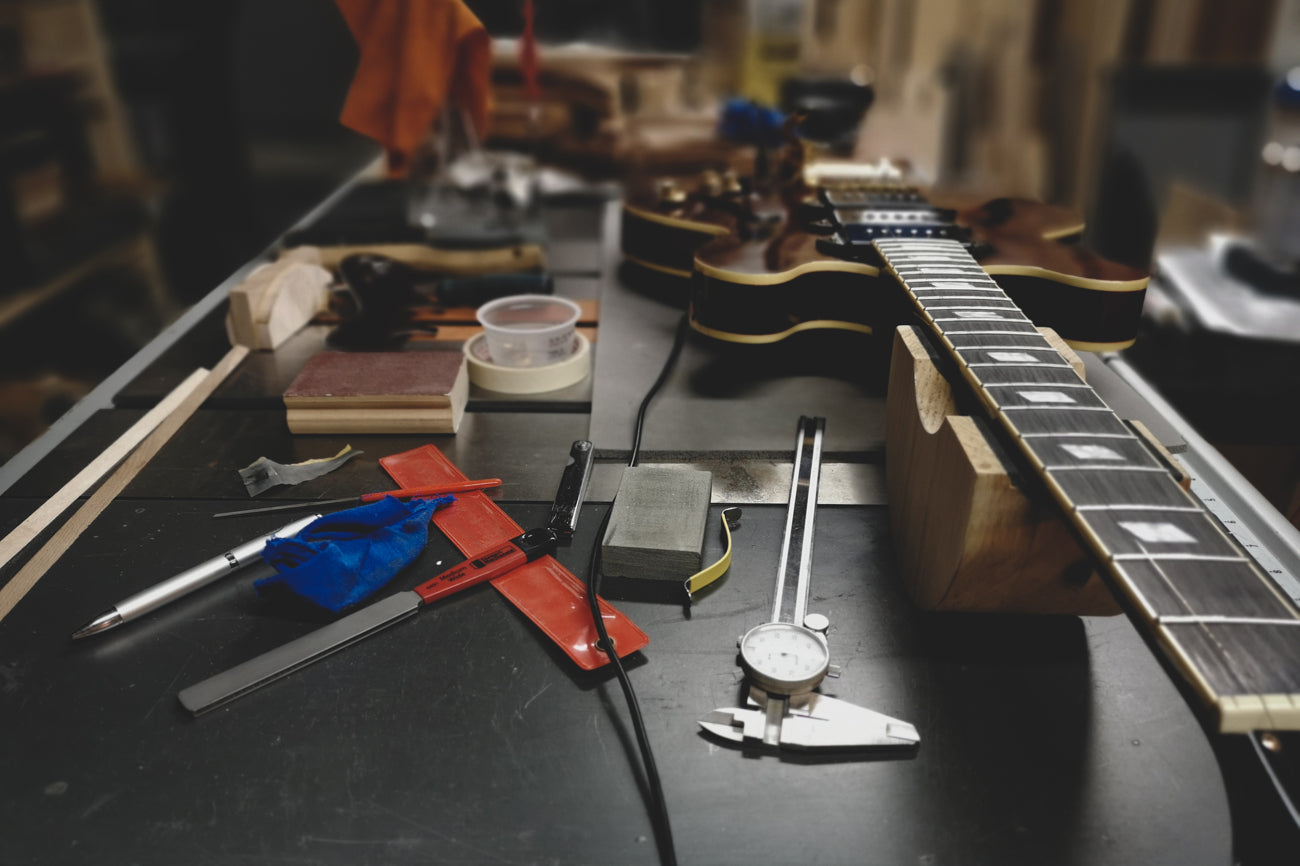
Here are the most common mistakes I see in my workshop... and how to avoid them to make an informed choice.
🎯 1. Looking for the best pickup instead of the right pickup
The question "What's the best pickup?" comes up all the time. The problem is that there is no universal "best" pickup.
- A vintage PAF can be magical... or completely muffled depending on the guitar.
- A bright single coil can be too aggressive on an already very resonant instrument.
- A high-output pickup can crush the dynamics of a subtle player.
👉 The real question to ask: Which pickup best serves my instrument, my playing, and my musical style?
🎛️ 2. Ignoring the interaction between the pickup and the guitar
A pickup never sounds alone. It reacts to:
- wood density and stiffness
- scale length
- bridge type
- neck mass
- string tension
- height adjustment
Many guitarists choose a pickup because they liked its sound... on another guitar. But the same pickup can behave totally differently on another instrument.
👉 Always think guitar + pickup combination, never pickup in isolation.
🔊 3. Confusing output level with sound quality
Classic mistake: believing that a powerful pickup is "better."
A high-output pickup:
- compresses more
- reduces dynamics
- accentuates mids
- pushes the amp into saturation faster
This is perfect for some styles, but disastrous for others.
👉 If you like nuance, light attacks, open chords... A pickup that's too powerful will rob you of your expressiveness.
🎚️ 4. Neglecting the importance of wiring and electronics
A high-end pickup connected to:
- an unsuitable potentiometer
- poor quality wiring/soldering
- poorly managed grounding
... will produce a mediocre result.
Conversely, a decent pickup in well-designed electronics can become surprisingly musical.
👉 The pickup is just one link. The electronics are your guitar's nervous system.
🎧 5. Relying solely on YouTube demos
Demos are useful... but misleading.
Why?
- compressors and EQ applied in post-production
- colored recording microphones
- different amps
- different hands
- different musical context
- platform compression algorithms
👉 A demo gives a tendency, not a truth.
🧩 6. Forgetting your own playing style
Two guitarists playing the same guitar with the same pickup will never get the same sound.
- attack
- dynamics
- pick position
- playing force
- articulation
- musical intention
All of these greatly influence the pickup's response.
👉 The pickup should adapt to your playing, not the other way around.
🪛 7. Not adjusting the pickup after installation
Many install a pickup... and stop there. However, pickup height changes everything:
- too high → aggressive sound, lack of air, reduced sustain
- too low → loss of presence, lack of body
- imbalance between strings → muddy mix
A millimeter adjustment can transform an average pickup into an excellent one.
👉 Installing a pickup without adjusting it is like buying a guitar without tuning it.
🧭 Conclusion: choosing a pickup means choosing a sound direction
Choosing a pickup is not a lottery or a matter of fashion. It's a thoughtful process that requires understanding:
- your guitar
- your playing
- your musical universe
- your sensitivity
- your real needs
When these elements align, the pickup becomes a natural extension of your expression.
And if you have any doubts, I can help you analyze your instrument and your playing to find the pickup that truly represents you.